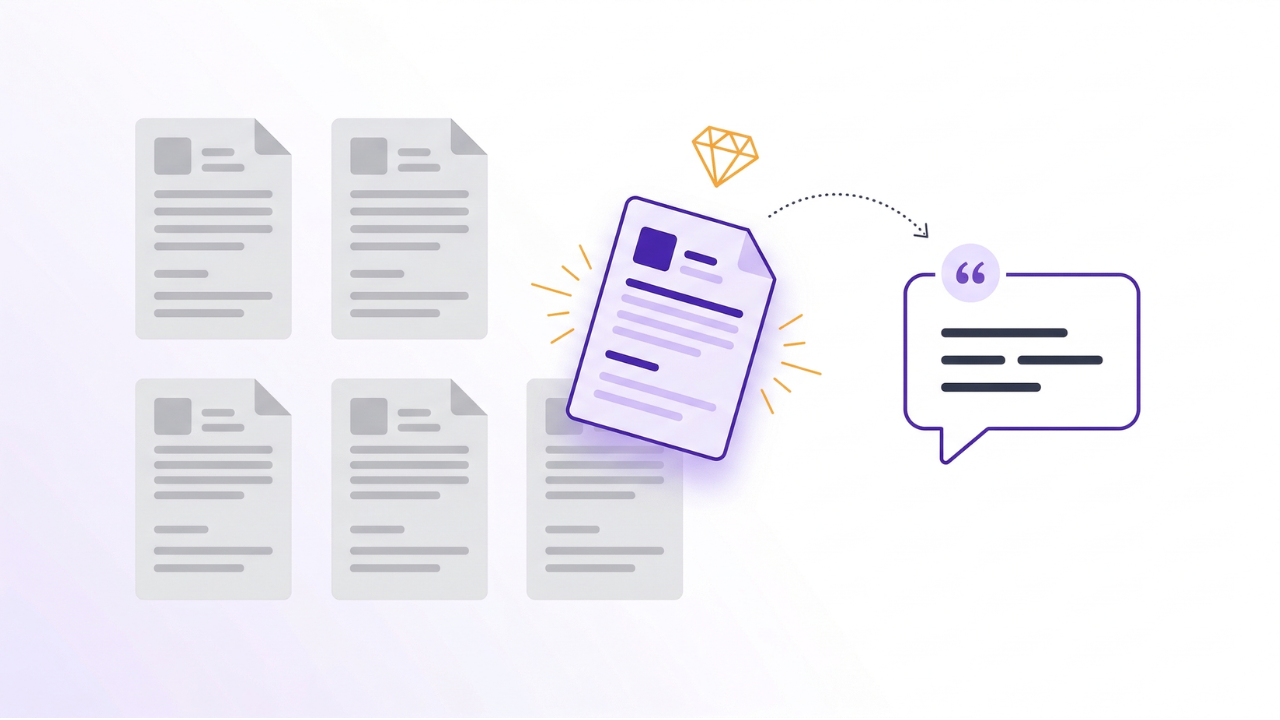
"What makes you unique?" is the question that trips up candidates who have otherwise prepared well. It feels like a trap: be too modest and you blend in, be too bold and you sound arrogant. The right answer requires self-awareness, a specific example, and a clear link to what the employer actually needs.
This guide gives you a simple framework, 10+ sample answers, and a clear list of what to avoid. By the end, you will have a strong, authentic answer ready for your next interview.
Why Interviewers Ask This Question
"What makes you unique?" is a re-framing of the same question every interviewer is really asking: Why should we hire you instead of the other qualified candidates?
Hiring managers use it to check:
- Self-awareness. Do you know what actually differentiates you?
- Relevance. Can you connect your strengths to what this specific role needs?
- Confidence without arrogance. Can you speak to your value without overselling?
A strong answer names one or two traits, backs them up with evidence, and ties them to the job.
The 3-Step Formula for a Strong Answer
Step 1: Identify a real differentiator
The best differentiators are unusual skill combinations, not individual traits. "Hardworking" is not unique. "Strong technical background combined with fluent client-facing communication" is.
Examples of strong differentiators:
- Engineer who speaks the language of product: you can write code and run a customer discovery call
- Designer with data literacy: you can build a beautiful UI and read usage metrics to improve it
- Accountant who can train non-finance teams: you understand the numbers and can explain them in plain English
- Nurse with digital health experience: you have clinical depth and have implemented new EHR systems
Step 2: Back it up with a specific example
Every differentiator needs evidence. A short story with a specific outcome is what makes your answer memorable.
Step 3: Connect it to the role
Close by linking your unique trait to a specific need in the job description. This is what separates a good answer from a great one.
10 Sample Answers for "What Makes You Unique?"
Example 1: Unusual skill combination
"What makes me unique is the combination of deep technical skills and strong client communication. I spent 4 years as a software engineer before moving into solutions engineering, and that technical foundation means I can answer prospect questions on the spot without looping in an engineer. In my last role, this helped me shorten our average sales cycle by 12 days, because the customer could trust the answer they got in the first meeting."
Example 2: Domain expertise + new skill
"What sets me apart is my background: I spent 8 years as a nurse before transitioning into healthcare product management. I understand clinical workflows at a level most PMs do not, and I can run user research sessions with doctors and nurses in their own language. That helped us launch a clinical decision tool that hit 85% adoption in its first hospital rollout, well above the industry norm."
Example 3: Organisational superpower
"What makes me unique is an unusually strong systems mindset. In my last role as an office coordinator, I rebuilt our supply chain tracking, which reduced our office expenses by 30% year over year. I notice inefficiencies that others have stopped seeing, and I enjoy building the systems that fix them."
Example 4: Empathy and relationship building
"What makes me unique is my ability to read people quickly and adapt how I communicate. As an account executive, I consistently exceeded my quota because I could tell within the first 10 minutes whether a prospect responded best to data, storytelling, or peer validation, and I adjusted the conversation accordingly. I closed 140% of my quota last year in a team that averaged 95%."
Example 5: Cultural or language background
"What makes me unique is that I have worked in both the UK and Singapore markets, across 6 years. That dual context helped me localise our last product launch without the cultural missteps most teams make. The Singapore launch hit 120% of its 6-month targets in 3 months."
Example 6: Hybrid experience
"I bring a combination most candidates do not: a decade in retail operations, combined with a data science qualification I completed part-time. That means I can run a store's P&L and I can also build the analytics dashboards that help regional managers act on what the data says. I used this at my last company to launch a store-level pricing model that increased margin by 8%."
Example 7: Learning velocity
"What makes me unique is how quickly I pick up new domains. I joined my current company knowing almost nothing about insurance, and within 6 months I was running the pricing team. I have a framework for learning a new domain quickly: map the top 10 terms, shadow 3 practitioners, and produce a summary document within my first 30 days. I would apply the same approach here."
Example 8: Founder mentality
"What makes me unique is that I built and sold a small business before joining corporate life, which shaped how I approach work. I tend to think about unit economics earlier than most, and I am comfortable prioritising ruthlessly when resources are tight. This helped my current team deliver 90% of our roadmap with 60% of the originally planned budget."
Example 9: Technical depth as a non-engineer
"In a marketing team, I am unusually technical. I write my own SQL queries to pull data and I built our entire lead scoring model using Python, which our data team helped me productionise. This helped me reduce our reliance on data analysts for routine reporting and let me iterate on campaign performance much faster than marketers usually can."
Example 10: For a Fresher
"What makes me unique as a graduate is that I combined my computer science degree with 2 years of competitive debate. The debating background has given me a level of on-the-spot communication you do not often see in engineering graduates. In my dissertation defence, I handled 45 minutes of technical questions from the panel with a confidence my supervisor specifically commented on. I think that combination would help me in a client-facing graduate role like this one."
What to Avoid
1. Generic answers
"I am a hard worker" or "I am motivated" are not differentiators. Every candidate says this.
2. Irrelevant personal trivia
Your ability to solve Rubik's cubes is not relevant to most roles. Pick traits that map to the job.
3. Overly boastful language
"I am the best at what I do" reads as arrogance without evidence. Let your example prove the point.
4. Traits without examples
If you cannot back it up with a specific story, pick a different trait. An unsupported claim is worse than no claim at all.
5. Copying stock answers
Every career site has the same 5 sample answers. Hiring managers have heard them all. Start from your genuine strengths, not a template.
6. Trying to be truly unique
The question is about being distinctive for this role, not being the only person in the world who can do something. Keep it realistic.
How to Identify What Actually Makes You Unique
Most people struggle to identify their own differentiators. Try this exercise.
1. Ask 3 people who know your work well
"What do you think I am better at than most people you work with?" You will often hear themes that surprise you.
2. List your unusual combinations
Look at your CV. Where do two skills or experiences intersect in a way most candidates do not share? Write down the top 3.
3. Check against the job description
For each differentiator, ask: "Does this map to a real need in the role?" If yes, it is an answer candidate. If no, save it for another interview.
4. Test it on a friend
Say your answer out loud. If their reaction is "interesting, tell me more," you have a winner. If it is "okay, sure," keep iterating.
Variations of This Question
"What makes you unique?" comes in many forms. The same answer works for all of them.
- "What sets you apart from other candidates?"
- "Why should we choose you over someone with similar qualifications?"
- "What is your unfair advantage?"
- "What is your X factor?"
- "What makes you stand out?"
For each variation, use the same 3-step formula: trait, example, relevance.
For related interview prep, see our guides on why should we hire you, how to describe yourself, and strengths and weaknesses.
Frequently Asked Questions
How long should my answer be?
45 to 75 seconds. Short enough to stay sharp, long enough to include a concrete example. Practise with a timer until you can deliver it smoothly.
Can I mention a personal quality like being an identical twin?
Only if you can genuinely tie it to a professional skill. "Being an identical twin made me unusually attuned to interpersonal dynamics" could work. "I am a twin" on its own does not.
What if I do not feel like I have anything unique?
Everyone has unusual combinations of experience, background, or interests. Look at the intersection of your skills, not individual skills. Ask people who know you well. You will find something.
Should my answer differ for different roles?
Yes. The trait you highlight should match the job description. If the role is client-facing, lean into communication strengths. If it is technical, lean into your technical combinations. Prepare 2 or 3 variations you can draw from.
Is it okay to mention something unusual like a hobby or lifestyle choice?
Only if it demonstrates a professional skill relevant to the role. "I have cycled across Europe solo" can signal resilience and planning, which is relevant for some roles. For more on what hobbies work on your CV, see our hobbies guide.
Key Takeaways
- Use the Trait → Example → Relevance framework for every answer
- The best differentiators are unusual combinations of skills or experiences, not individual traits
- Every claim needs a specific, quantified example to be memorable
- Tie your trait back to something the job description calls for
- Avoid generic claims, irrelevant trivia, and overly boastful language
- Prepare variations for different roles and different interviewers
- Pair this prep with your why should we hire you answer and self introduction examples